
How Poor Renovation Planning Destroys Project Value
Poor planning increases change orders, delays, and hidden costs that erode project value and Riley Riley Construction helps owners prevent these failures. We emphasize early budgeting, scope definition, and stakeholder alignment to protect ROI. Call 17207828897 to initiate a planning review that identifies risk areas before construction starts. Our persuasive guidance saves time and preserves the intended return.
When projects begin without a disciplined planning phase, the result is predictable: a cascade of change orders, schedule slips, and concealed expenses that chip away at the original investment thesis. This page explains how poor renovation planning destroys project value, and it outlines a practical approach owners can use to lock in budget certainty, reduce disputes, and preserve net value. Riley Riley Construction brings focused preconstruction review and stakeholder alignment so owners do not pay more later for fixes that could have been avoided.
We write from the perspective of owners who need clear decision-making tools and concrete actions before a single wall is torn down. The guidance here is intentionally practical-checklists, risk categories, and an example case study-to help teams act quickly and defensibly. If you prefer a direct conversation, contact Riley Riley Construction at 17207828897 to set up a planning review.
Why poor planning drives change orders and delays
Change orders are more than administrative paperwork; they are signals of unresolved expectations. When scope, budget, and schedule are not tightly defined at the outset, contractors must interpret ambiguous instructions. That interpretation becomes variation. Variation becomes rework, and rework becomes cost and time. A seemingly small decision-changing a finish, altering a mechanical route, or adding outlets-can ripple through procurement, sequencing, and certification, multiplying cost far beyond the incremental item.
Delays closely follow ambiguous scope because dependencies are rarely identified early. Equipment lead times, permit reviews, and subcontractor sequencing require lead time and contingency. Without that visibility, a delayed long-lead item can halt downstream trades, creating idle labor, extended supervision costs, and compressed trade windows that force premium pricing. Inefficient communication channels and unaligned stakeholders exacerbate these delays, turning a manageable schedule into a chronic problem.
Finally, poor planning undermines stakeholder confidence. Owners, investors, property managers, and end-users need consistent, verifiable updates. When change orders compound and timelines slip, confidence erodes and decision-making becomes reactive rather than proactive. That reactive posture increases the probability of poor cost choices-quick fixes that address symptoms instead of root causes.
Common root causes
- Undefined or evolving scope that leaves key decisions unresolved at bid time.
- Incomplete existing conditions documentation (as-built drawings, hazardous material reports).
- Insufficient budget contingency for programmatic or market volatility.
- Poorly coordinated procurement for long-lead items.
- Weak stakeholder governance and decision-making timelines.
Hidden costs that erode project value
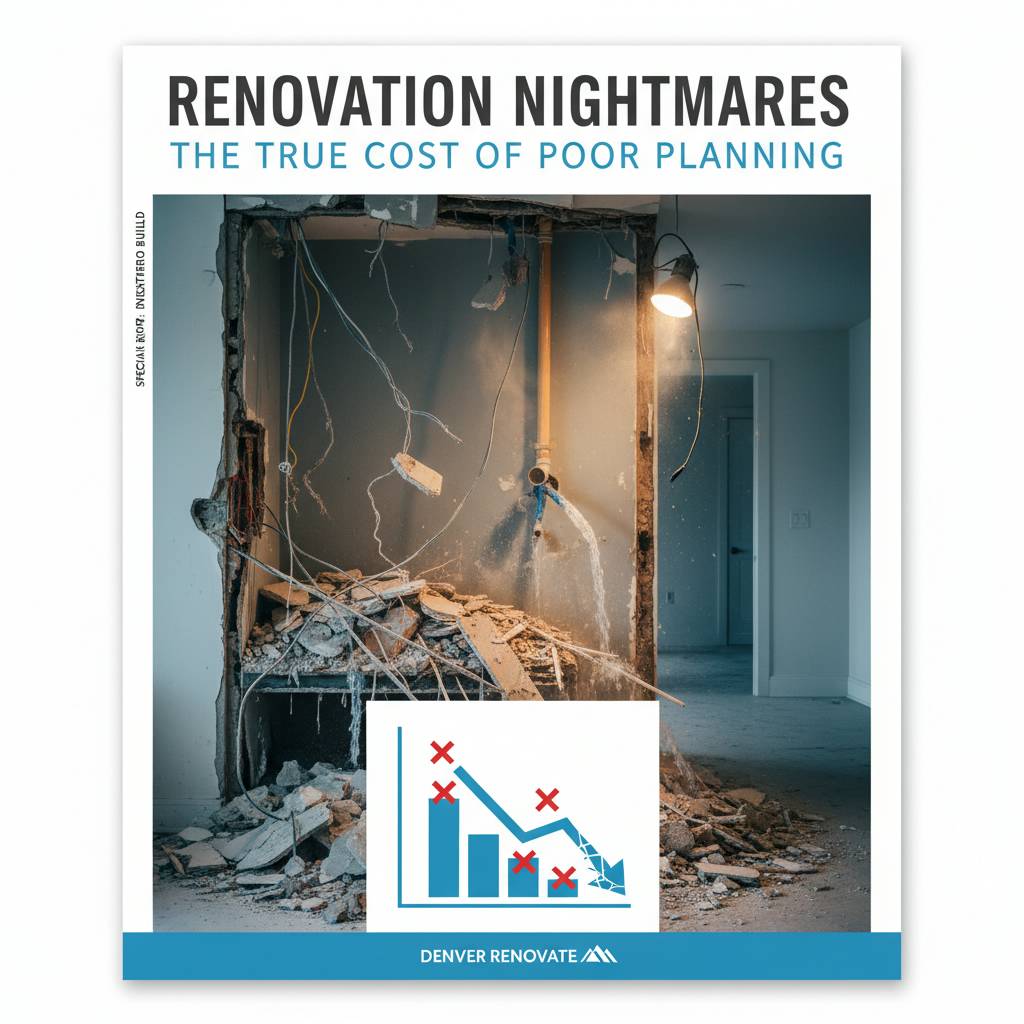 Visible line-item costs-materials, labor, and permits-are only part of the financial picture. Hidden costs creep in during construction and post-completion and often exceed the initial contractor margin. Recognizing these categories early is the first step to protecting return on investment (ROI).
Below are typical hidden cost categories, how they materialize, and how owners can minimize them through planning and governance. Understanding these costs changes conversations from "who pays" to "how do we avoid it altogether."
| Impact Area | How It Appears | Typical Cost Range |
|---|---|---|
| Change orders and rework | Design clarifications, unknown site conditions, scope changes | $75-$200 per labor hour; variable total |
| Schedule acceleration | Premium overtime, expedited shipping, added supervision | $500-$5,000 per day depending on scale |
| Extended general conditions | Longer site management, temp facilities, utility charges | $1,000-$10,000 per week |
| Post-occupancy corrections | Punch list work, warranty repairs, lost revenues | $1,000-$50,000 depending on scope |
These figures illustrate that even modest daily overruns or small rework items accumulate quickly. A $1,000-per-week extension of general conditions, for example, becomes $52,000 over a year-money that comes directly from an owner's expected return. The antidote is disciplined up-front analysis and contractual clarity.
How early budgeting, scope definition, and stakeholder alignment protect ROI
Protecting ROI starts with three connected activities: a realistic early budget, crystal-clear scope definition, and formalized stakeholder alignment. Each activity reduces uncertainty and provides leverage during procurement and construction. Together they create a defensible baseline against which change orders and claims are judged.
Early budgeting should be evidence-based, not wishful thinking. Use market data, comparable projects, and a conservative view of escalation and contingency. Budgeting is not about locking a number in stone; it is about setting expectations and creating accountability. A well-documented early budget sets the stage for trade-offs and prioritization conversations before costs are sunk into procurement and demolition.
Scope definiton must be precise at the level required for procurement. That means defining finishes, system performance criteria, connection points, and acceptability thresholds. Where some decisions are legitimately deferred, document the decision path, timelines, and budgetary triggers. This prevents scope drift and ensures that deferred choices do not become open-ended liabilities during construction.
Stakeholder alignment establishes decision authority and response timelines. When owners, architects, engineers, property managers, and tenants know who decides and how quickly, disputes are resolved on schedule. Formal meeting cadences, decision logs, and executive sign-off points maintain momentum and reduce the chance that small issues snowball into major delays.
Practical planning checklist before breaking ground
Below is a targeted checklist that reflects lessons learned across renovation and new-construction projects. Follow it to reduce surprises and to arm the team with the documentation needed to defend the budget and schedule.
- Document existing conditions: As-built drawings, core samples, MEP mapping, and hazardous material surveys.
- Establish a validated early budget: Include itemized contingencies for unknowns and escalation based on realistic timelines.
- Define scope with acceptance criteria: For each trade, define what "done" looks like and who signs off.
- Lock down long-lead items: Identify and order equipment, finishes, and fixtures that have multi-week to multi-month lead times.
- Create a decision matrix: Assign authority, response deadlines, and escalation paths for every material decision.
- Set a change management process: Require written approvals, cost estimates, and schedule impacts before implementing changes.
- Coordinate permits and inspections: Build regulatory timelines into the schedule, and pre-engage inspectors where possible.
- Plan for contingency execution: Define when contingency funds can be accessed and who authorizes use.
Budgeting, procurement, and phasing-key substeps
Budgeting should break down into hard costs, soft costs, and contingency pools. Procurement must be sequenced to protect long-lead items, while phasing plans should prioritize work that unlocks revenue or reduces exposure. Combining these three substeps delivers a coherent preconstruction plan that reduces both cost and schedule risk.
Case study: turning risk into preserved value
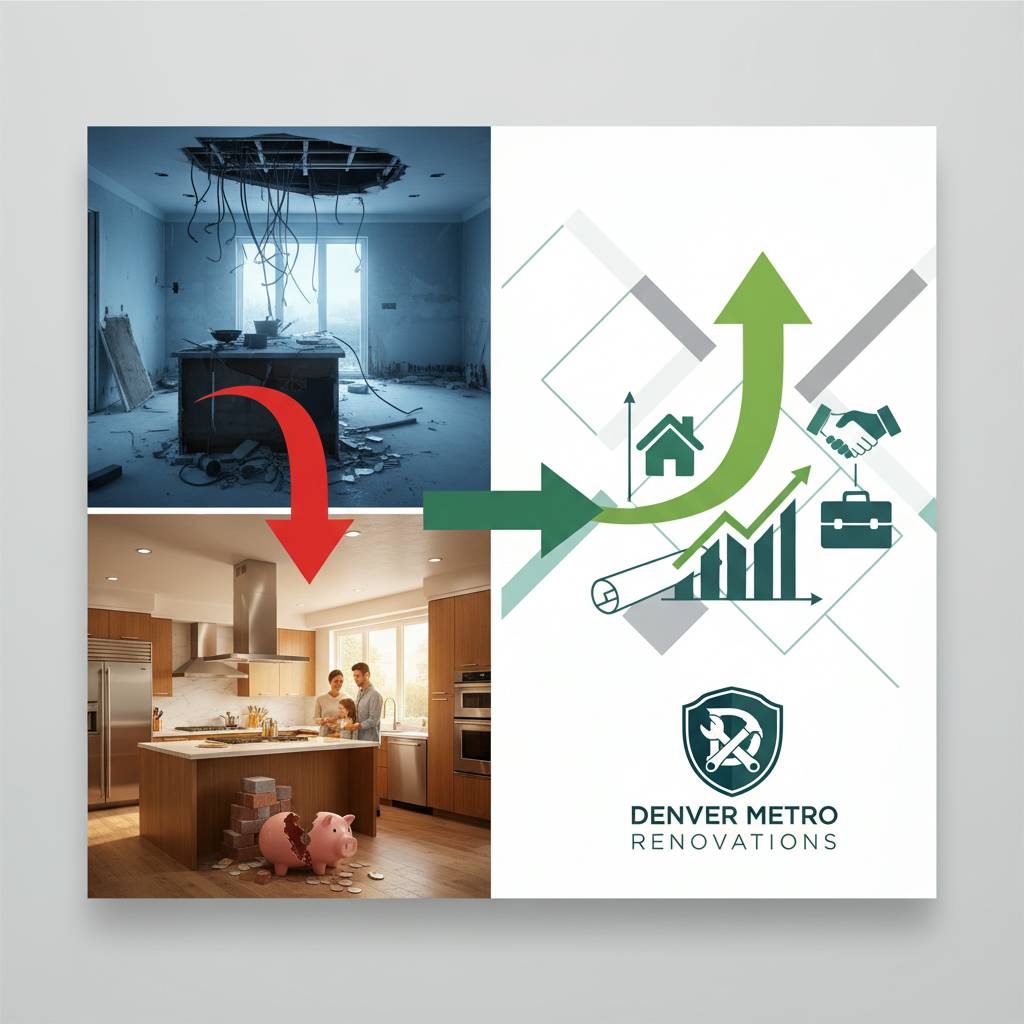 A mid-size renovation of a commercial office building illustrates the difference planning makes. The owner faced tenant disruption risk, a tight delivery window, and a complex HVAC replacement. An initial hazard was unknown duct routing and interstitial obstructions that typically trigger change orders. Riley Riley Construction performed an early planning review with destructive test locations, targeted scans, and a vendor scheduling plan.
By addressing unknowns before demolition, the team avoided multiple potential change orders. The planning review identified two long-lead chillers that required 14-week procurement time and recommended immediate early order. The owner allocated a moderate contingency and locked scope on finishes that would be installed immediately after HVAC work. The result: the project was completed on schedule, tenant downtime was minimized, and the net savings-the avoided change orders and schedule acceleration costs-exceeded the planning fee several times over.
More importantly, the owner preserved the intended ROI because capital was spent predictably and the asset was returned to service on time. This example shows how targeted preconstruction actions, focused on the riskiest variables, protect project value in tangible ways.
How Riley Riley Construction structures a planning review
Our planning review is structured to reveal the highest-impact risks quickly and to provide executable mitigation recommendations. The review typically includes an existing-conditions sweep, a long-lead procurement audit, scope verification against performance criteria, and a stakeholder decision plan. We deliver a concise report that maps each identified risk to a recommended action and an estimated cost-to-resolve or prevent.
Riley Riley Construction balances rigor with pragmatism. We do not overproduce documents that sit on a shelf; we produce a prioritized action list that owners can implement immediately. When useful, we include a phased procurement schedule and a decision matrix that assigns authority and timing for every outstanding item, ensuring that the field has unambiguous direction.
Occasionally, projects require a short pilot investigation-daylight demolition, selective scanning, or a mechanical core sample-to validate high-risk assumptions. These low-disruption steps often yield outsized returns by converting unknowns into fixed conditions and enabling accurate pricing.
FAQ: common owner questions
Q: How much should I budget for contingency?
A: Contingency depends on project complexity and the completeness of design. Typical guidance ranges from 5% to 15% of hard costs for renovations, with higher contingencies for projects with significant unknowns. Use a risk-based approach rather than an arbitrary percent.
Q: Can change orders be entirely avoided?
A: No-some level of change is normal. The goal is to minimize avoidable change through upfront work: site verification, clarified scope, and decision governance. By doing so, the remaining changes are usually predictable and manageable.
Q: How does early procurement reduce costs?
A: Locking long-lead items prevents premium rush shipping, protects against market price escalation, and avoids schedule-driven acceleration costs. Early procurement also reduces the variability contractors must price into bids, often lowering the overall contract price.
Take action: initiate a planning review
If you are facing a renovation or construction project and want to know which risks will erode value, the best next step is a targeted planning review. Riley Riley Construction provides a clear, prioritized action plan that identifies where change orders are most likely and which decisions will preserve schedule and ROI.
For a prompt assessment, call Riley Riley Construction at 17207828897. We will outline the review scope, anticipated deliverables, and a transparent fee estimate so you can decide quickly and with confidence. If you prefer, ask for during scheduling for a focused conversation on risk-prioritization.
Ready to protect your project's value? Contact Riley Riley Construction today at 17207828897 to schedule a planning review and get ahead of change orders, delays, and hidden costs.