
Open-Plan Redesign Compared to Private Offices ROI
Comparing open-plan and private office models requires evaluating productivity, lease appeal, and cost, and Riley Riley Construction provides objective ROI comparisons. We assess your workforce needs and forecast the financial impact of different layouts. Call 17207828897 to get a tailored analysis that quantifies benefits and trade-offs. Our professional guidance helps leaders choose the layout that maximizes both culture and return.
Organizations considering a workspace redesign need clear, evidence-based comparisons. At Riley Riley Construction, we focus on practical outcomes: how a proposed open-plan redesign compared to private offices ROI plays out across productivity, leasing dynamics, and total cost of occupancy. A layout decision is not purely aesthetic - it affects hiring, retention, rent negotiation, capital deployment, and day-to-day operations.
Decision-makers often bring competing priorities: support teamwork, preserve concentrated focus, and control costs. We balance those priorities by quantifying both hard and soft benefits, translating them into dollars and metrics that executives and real estate managers can use. When you call 17207828897, we start with your headcount, work patterns, and lease profile to deliver a tailored, defensible ROI comparison.
Measuring productivity: metrics that matter
Productivity is often cited as the central argument for either layout, but it is rarely measured consistently. To compare open-plan and private offices, track objective indicators such as time-to-task completion, error rates, meeting efficiency, sick days, turnover, and employee engagement scores. Complement these with observational studies-how often do people collaborate face-to-face, and how frequently are individual, focused tasks interrupted? Combining qualitative and quantitative data produces a nuanced picture.
Productivity impacts are context-specific. Teams doing collaborative design, sales, or rapid iteration typically benefit from more frequent, informal interaction that open-plan spaces encourage. Conversely, functions requiring deep concentration-legal, research, coding-often suffer with excessive noise and visual distractions. The right comparison models these functional differences, weighting productivity assumptions by departmental time allocation and task type.
Collecting baseline data
A reliable ROI model starts with current-state measurements. Baseline data should include headcount by function, average time spent on collaborative versus focused work, current absence and turnover costs, and utilization of meeting rooms. Surveys and short diary studies are low-cost ways to capture perceived productivity and privacy needs. With this baseline, projected changes from an open-plan or private office conversion translate into estimated revenue or cost impacts over a defined time horizon.
Lease appeal and tenant value: what landlords and brokers look for
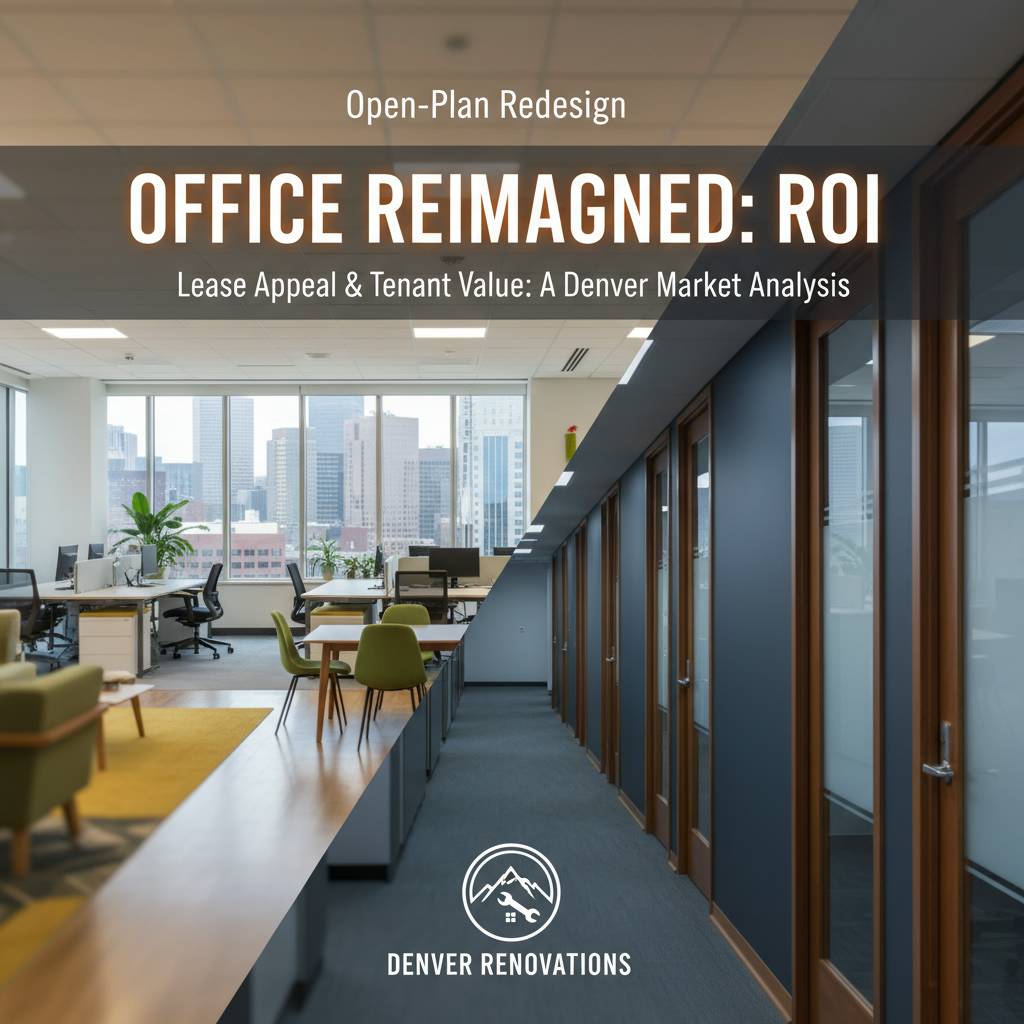 Layout decisions influence not only internal operations but also external marketability. For landlord-owned space or a tenant considering relocation, the office model affects lease rates, sublease potential, and renewal probability. Open-plan configurations often yield higher usable occupancy per square foot, lowering per-person rent for tenants or increasing effective rent for landlords when marketed as efficient, flexible space. Private-office-heavy floors can command a premium from firms that prioritize status, client-facing privacy, or confidentiality.
Tenants weigh layout when evaluating long-term occupancy costs versus workforce preferences. A thoughtfully designed open-plan with ample quiet zones can be marketed to hybrid tenants as flexible and modern, while buildings with many private offices may appeal to professional services and law firms. For investors and brokers, Riley Riley Construction models how layout choices affect net operating income, tenant retention, and the speed of lease-up in a competitive market.
- Open-plan advantages: higher desk density, perceived modernity, easier change management for growth or contraction.
- Private-office advantages: higher rent per desk for certain tenant classes, easier to lease to tenants seeking privacy.
- Hybrid strategies: combine both to broaden leasing appeal and mitigate vacancy risk.
Cost analysis: capital and operating expenditures
Cost comparisons should capture initial fit-out, furniture, relocation, and ongoing operational expenses. Typical build-out costs vary widely with finishes and services; a basic open-plan fit-out may range from $75-$200 per square foot depending on systems, while high-end private-office conversions with extensive demountable partitions or individual HVAC can be higher. Furniture strategies also differ: open-plan requires more modular workstations and collaboration areas; private offices require more walls, doors, and individualized lighting and HVAC adjustments.
Operating costs change as well. Open-plan layouts can reduce per-employee facility costs by increasing density, lowering utility and janitorial cost per person, and reducing leased square footage. However, hidden costs may include increased staff turnover if noise and lack of privacy degrade satisfaction. Private offices often produce higher per-person energy and maintenance costs but can reduce distractions and potential lost productivity for concentrated work. A full cost model captures both capital expenditures and multi-year operational differences.
Typical cost line-items to include
- Initial demolition and partitioning
- Workstation and private office furniture
- Audio, visual, and conferencing systems
- Acoustic treatments and privacy solutions
- Space planning, change management, and move costs
Modeling ROI: method and illustrative example
A robust ROI model lays out scenarios and time horizons-commonly 3, 5, and 10 years-and converts productivity assumptions, lease impacts, and costs into net present values and payback periods. The model should test sensitivity to key variables: vacancy rates, rent escalations, headcount growth, and productivity delta. Sensitivity analysis reveals which assumptions drive the decision, allowing leaders to focus on reducing uncertainty in those areas.
Below is a concise illustrative comparison for a 50-person office to show how assumptions combine. This is simplified for clarity; your analysis should use organization-specific numbers.
| Item | Open-plan | Private offices |
|---|---|---|
| Rentable square feet | 3,000 | 4,000 |
| Fit-out cost (per sf) | $75-$120 | $120-$200 |
| Estimated annual productivity change | 1% net (collaboration gains minus distraction) | -0.5% net (less spontaneous collaboration) |
| Annual operating cost per person | $6,500 | $8,000 |
| Net ROI (5-year illustrative) | Positive in scenarios with >8% density gain or >2% productivity uplift | Positive if premium rent or reduced turnover offsets higher space costs |
This example shows how an open-plan approach can improve ROI when density and modest collaboration gains are realized, but private offices retain value where tenant willingness to pay or productivity benefits from privacy are demonstrable. Riley Riley Construction models include discounted cash flows and scenario analysis so leaders see a range of plausible outcomes rather than a single forecast.
Human factors and mitigation strategies
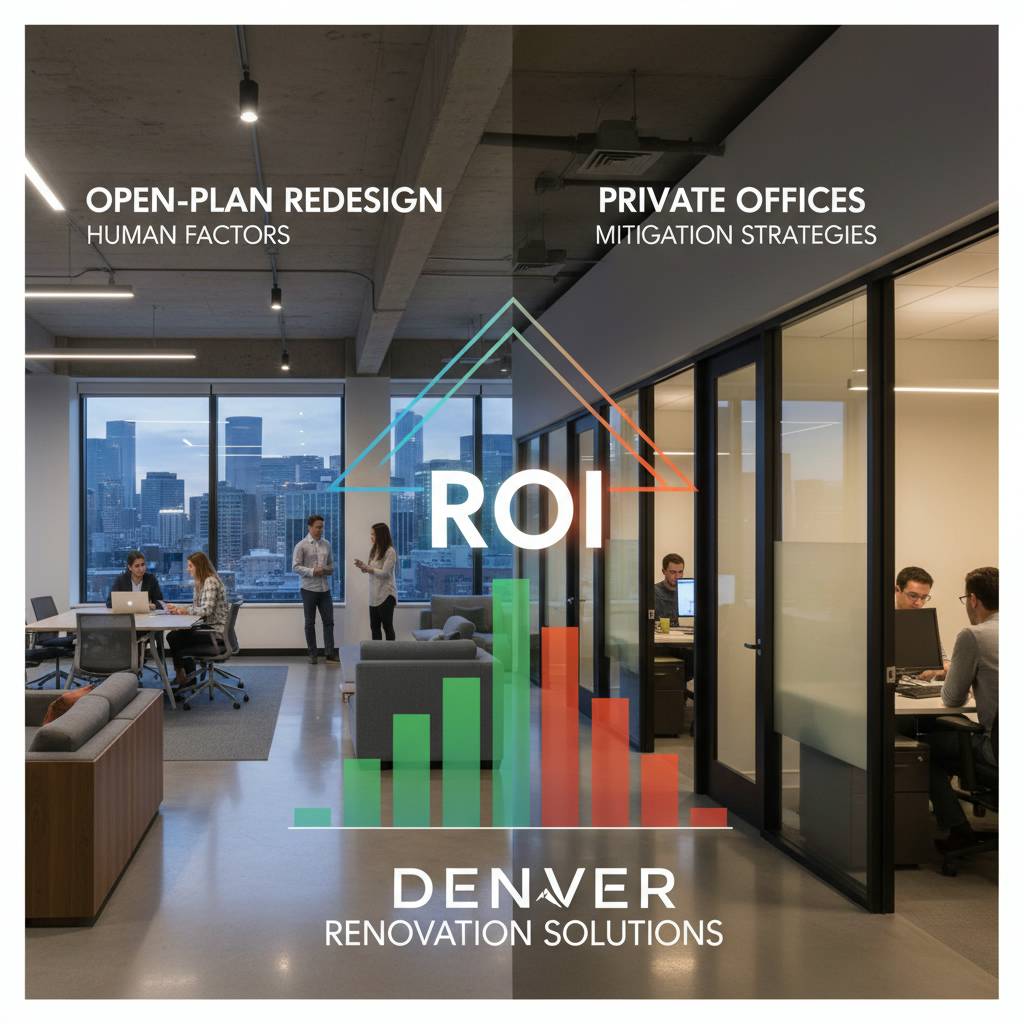 Workplace satisfaction, wellbeing, and culture are central to any layout decision. Open-plan spaces can foster serendipity and rapid problem-solving, which supports innovation-oriented cultures. They can feel inclusive and transparent. The downside-noise, distractions, and perceived lack of control-can undermine employee wellbeing if left unaddressed. Private offices protect concentration and status but can reduce informal mentoring and spontaneous collaboration.
A practical middle ground is a design that intentionally provides multiple work settings: quiet focus rooms, modular touchdown spaces, formal meeting rooms, and social zones. Acoustic zoning, scheduling policies for concentration time, and clear protocols for video calls help mitigate common open-plan complaints. For private offices, carving out shared collaboration hubs encourages cross-team interaction without forcing everyone into a single layout approach.
- Design for choice: offer varied settings to match different tasks.
- Invest in acoustics: sound masking and absorptive materials.
- Establish etiquette: norms for noise, calls, and movement.
- Measure after implementation: pulse surveys and utilization data to adjust.
Implementation: phased pilots and change management
Switching layouts is a major change that benefits from phased implementation. Start with pilot areas where the opportunity to measure outcomes is highest and the risk from misalignment is lowest. A pilot can last 3-6 months and should include pre- and post-occupancy surveys, utilization tracking, and productivity indicators aligned to business outcomes. Phased rollouts allow you to refine furniture choices, acoustic treatments, and policies based on real user feedback.
Change management is equally important. Communicate the rationale clearly, involve representative employees early, and provide training on new behaviors (for example, how to book rooms, when to use headsets, and how to reserve quiet time). Engage facilities, IT, and HR to ensure the environment supports the new ways of working with the appropriate technology and policies.
Step-by-step implementation checklist
- Define objectives and success metrics
- Collect baseline utilization and productivity data
- Design pilot zones with mixed-use settings
- Deploy pilot, monitor, and iterate
- Scale with phased rollouts and continuous feedback loops
Frequently asked questions
How quickly will ROI appear after a redesign?
ROI timing depends on the nature of the investment. Operational savings from density gains can appear immediately as you renew leases or reassign space, while productivity improvements and turnover reduction may take 6-24 months to materialize. Capital recovery depends on amortization choices; our models typically project 3- to 10-year horizons to capture both short- and long-term effects.
Can hybrid solutions deliver the best of both worlds?
Yes. Hybrid layouts that thoughtfully combine open collaboration zones with dedicated private rooms or phone booths often deliver balanced outcomes. The key is deliberate programming and spatial allocation based on actual work patterns rather than trends alone. Hybrid solutions also increase lease appeal by serving a broader tenant base and can improve employee satisfaction when implemented with clear policies.
Case study snapshot
A mid-sized technology firm engaged Riley Riley Construction to model a move from a private-office floorplan to a hybrid open-plan design. Using time-motion studies and HR data, we projected a 10% increase in collaboration time and a 3% reduction in annual turnover. After a phased pilot and full rollout, the company reduced leased space by 18% and realized capital and operating savings that paid back the initial fit-out in 3.6 years, while employee engagement rose by 7 percentage points.
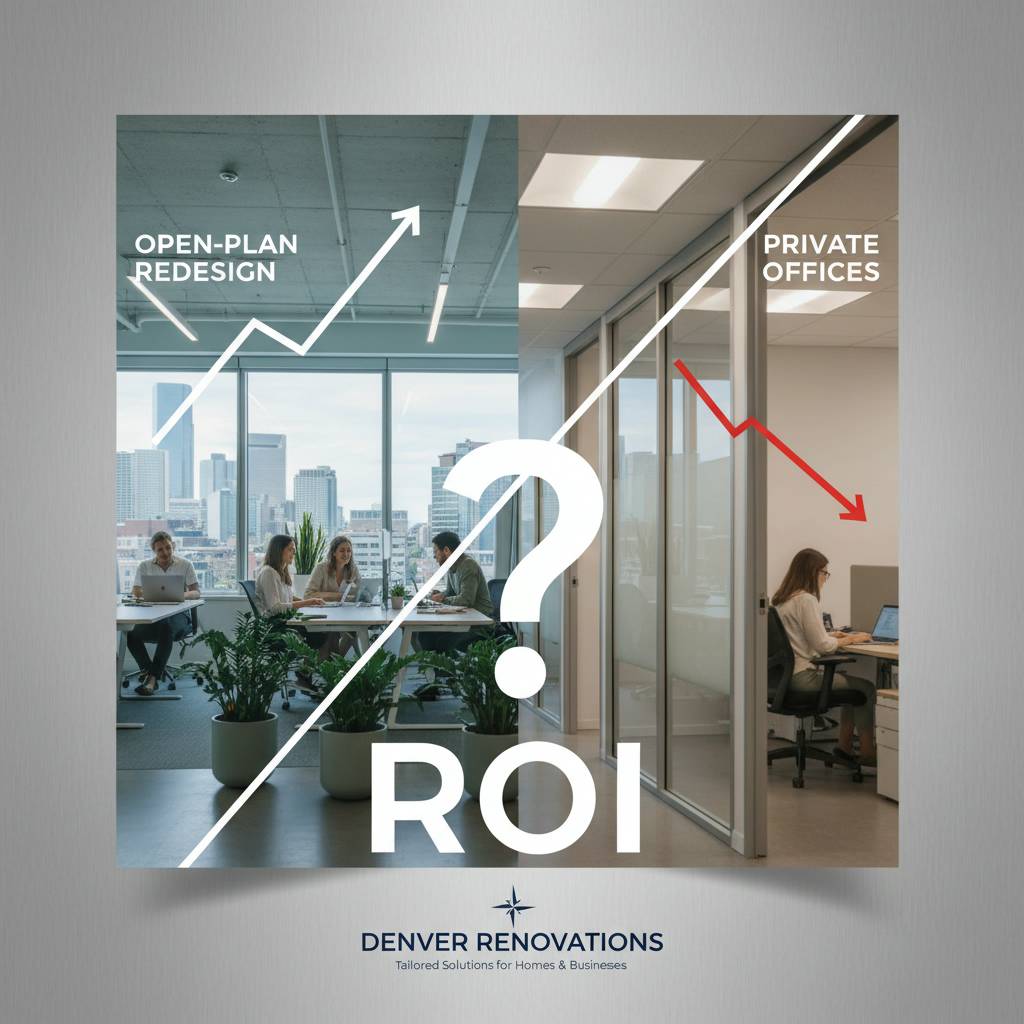
That outcome was driven by strong change management, targeted acoustic investments, and a careful mix of focus rooms and collaboration hubs. It demonstrates how a disciplined approach to measuring and managing trade-offs can produce both cultural and financial returns.
Next steps and how Riley Riley Construction helps
If you are evaluating an open-plan redesign compared to private offices ROI for your organization, start with a focused assessment: map work types, collect baseline utilization, and define the financial horizon for your decision. Riley Riley Construction offers a structured, customizable analysis that converts workplace choices into measurable financial and human outcomes. We can run scenarios, present comparison tables, and recommend phased implementation plans tailored to your culture and lease terms.
To request a tailored evaluation or schedule a scoping call, contact Riley Riley Construction at 17207828897. Our team will walk you through the data we need and deliver a comparative ROI report that helps leaders make informed, defensible choices. If you prefer a quick conversation first, ask for during your call.
Investing a little time up front to quantify the trade-offs between open-plan, private, and hybrid models produces better long-term outcomes for productivity, leasing strategy, and total cost of occupancy. Reach out to Riley Riley Construction - we translate workplace strategy into financial terms so you can choose the layout that best balances culture, performance, and return.