
Timeline to Renovate Office With Minimal Downtime
Short timelines with minimal downtime are achievable with phased planning
When your business needs a space refresh, the last thing you want is a renovation that halts operations for weeks. At the heart of every successful project is a carefully designed approach to the timeline to renovate office with minimal downtime. Riley Riley Construction specializes in accelerated commercial renovations, combining phased planning, precise logistics, and off-hour work so you can keep serving clients and supporting employees while improvements happen.
This page explains how a practical, human-centered schedule is created, what trade-offs are typical, and how to measure progress so you aren't guessing. We'll cover the core principles that reduce downtime, outline a phased model you can adapt to most office types, and share cost and schedule examples to help you plan. Use these ideas to create a renovation strategy that balances speed and quality.
Principles that make fast renovations feasible
There are three core principles that determine whether a project can be completed quickly without disrupting business continuity: segmentation, sequencing, and redundancy. Segmentation means breaking your office into self-contained zones so work can be limited to one area at a time. Sequencing is about ordering activities so that noisy or invasive tasks are scheduled when the fewest people are present. Redundancy ensures essential systems remain available-temporary HVAC, power, or meeting options-so normal operations don't grind to a halt.
Another critical factor is clear leadership and single-point responsibility for the schedule. When one project manager owns the timeline and coordinates subcontractors, vendors, and your facilities team, delays are easier to anticipate and mitigate. Communication plans that tell staff what to expect each week reduce uncertainty and boost productivity even during active construction.
The phased planning model: mapping work to occupancy
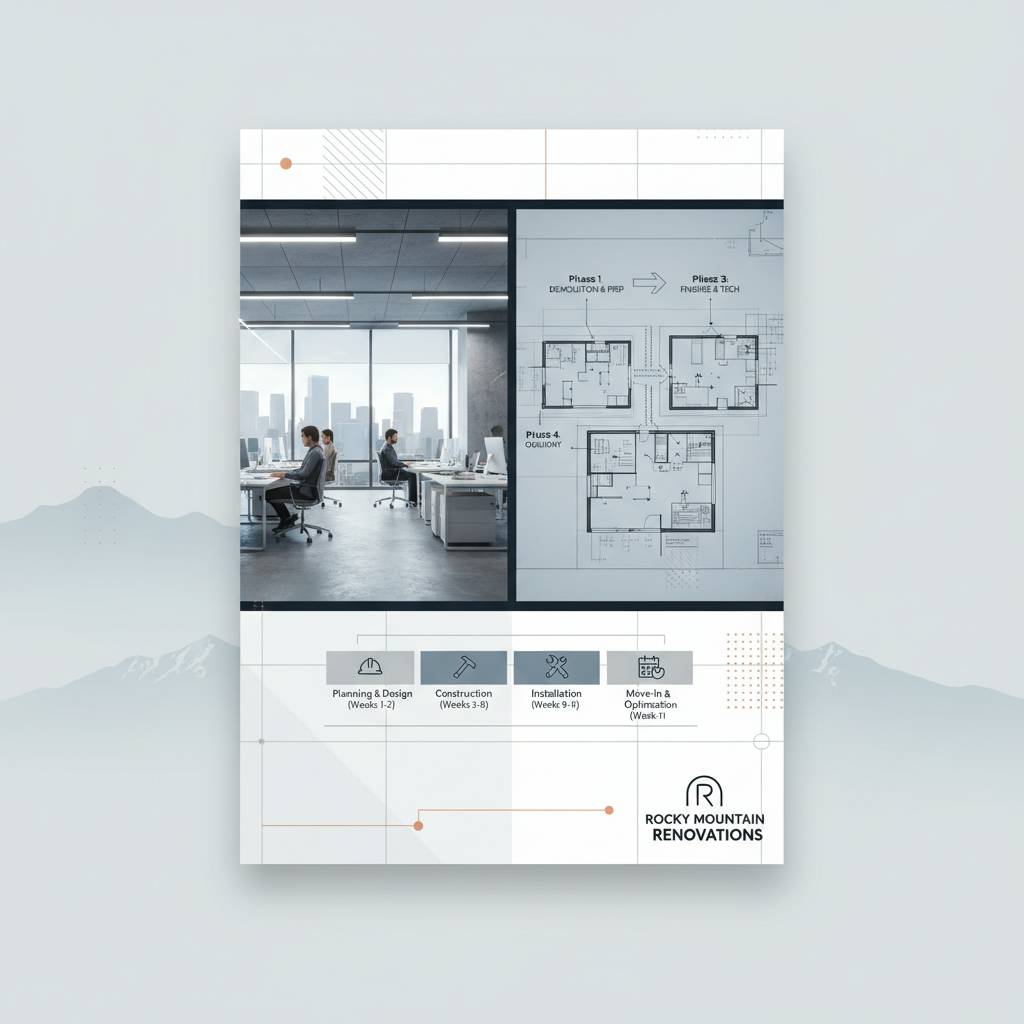 A phased planning model divides the project into logical blocks that align with how people use the space. A simple three-phase model often works well: Prepare & Isolate, Implement & Test, and Finish & Restore. Each phase is designed to contain specific scopes of work and limit the footprint of active construction to the minimum necessary. The result is an executable timeline to renovate office with minimal downtime that stakeholders can approve and employees can follow.
Phase 1 - Prepare & Isolate
In this first phase, the goal is to create a safe boundary between work and occupied areas. Typical activities include installing temporary walls and walkways, relocating sensitive equipment, and setting up dust and noise mitigation systems. Because the prep work is done in advance, subsequent trades can work faster and with fewer interruptions to daily business functions. A detailed logistical plan at this stage shortens the overall schedule by reducing surprises later.
Phase 2 - Implement & Test
During the implementation phase, the bulk of construction-demolition, MEP rough-ins, and modular installs-happens. Work is typically performed in tight windows during off-hours or in clearly scheduled shifts so that daytime operations are preserved. At defined checkpoints, systems are tested and commissioned while work continues in other areas. This overlapping of tasks, when well-managed, accelerates completion compared with a strictly serial approach.
Phase 3 - Finish & Restore
The final phase focuses on finishes, furniture installation, and final system tuning. Because functional systems are already verified in Phase 2, finish work is mainly cosmetic and can often be scheduled to minimize disruption completely. Final cleaning, wayfinding signage, and staff orientation sessions are completed here so the newly renovated space is ready for immediate use when the phase closes.
Logistics, off-hour work, and modular strategies
Logistics determine whether a fast schedule actually succeeds. Coordinating deliveries, staging, and waste removal removes common bottlenecks. Off-hour work is a powerful tool-scheduling demolition or heavy mechanical work overnight significantly reduces the need to relocate staff. Modular construction and prefabrication are equally effective: building components offsite and installing them quickly onsite reduces time exposed to dust and noise.
- Staging areas: Pre-allocate secure zones for materials to shorten delivery turnaround.
- Just-in-time deliveries: Reduce onsite congestion and handling time by timing shipments to installation windows.
- Prefabricated panels and furniture: Install large sections quickly, often in a single overnight shift.
- Night and weekend shifts: Keep daytime business functioning while construction moves forward.
Many clients find a hybrid approach-daytime light work, evening heavy work-strikes the best balance. Riley Riley Construction coordinates with building management, elevators, and janitorial services to secure the access and permits needed for extended hours and modular installations so there are no surprises on day one.
Scheduling, communication, and minimizing productivity loss
Employees tolerate construction better when they know what to expect. A proactive communications plan includes weekly updates, maps showing active zones, and clear instructions on alternative workspaces. Consider temporary remote work options or rotating on-site schedules for teams directly affected by noise or restricted access. These simple measures can cut perceived productivity loss dramatically.
Equally important is contingency planning. Include buffer time for inspections and supplier delays, and have backup plans for critical systems like internet, power, or conference rooms. A realistic timeline anticipates interruptions rather than assuming a perfect run. When clients ask how to reduce downtime, our first recommendation is to protect core functions first-meetings, data access, and essential staff-then align work windows around those needs.
Budgeting, timeline examples, and cost considerations
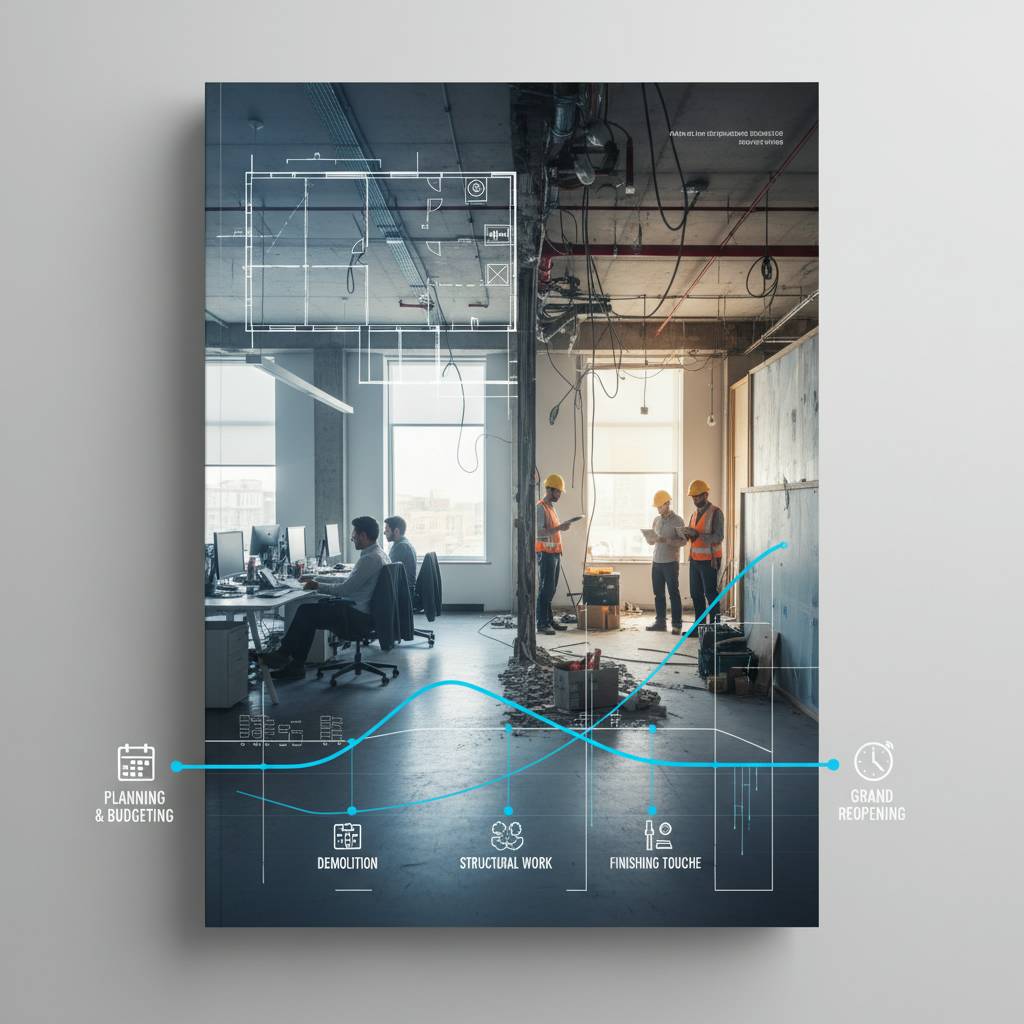 Short timelines can carry premium costs because overtime, expedited materials, or prefabrication often add expense. However, those costs are frequently offset by reduced lost productivity and faster realization of new operational efficiencies. Typical cost drivers include the type of finish, extent of MEP upgrades, and the level of modular work. For rough guidance, regional commercial renovation labor rates and finish selections can vary widely; expect some items in a range like $75-$200 per square foot depending on scope and finishes.
Below is a simple table that illustrates example timelines for different project scales under a phased approach. These are illustrative-not promises-but they show how breaking work into zones shortens the impact on operations.
| Project Scale | Typical Total Duration | Minimized Occupied Disruption |
|---|---|---|
| Small office refresh (2,000 sq ft) | 3-6 weeks | Major work in 1-2 zones over nights/weekends |
| Medium office remodel (10,000 sq ft) | 8-14 weeks | Phased by floor or wing; rotating staff schedules |
| Large multi-floor renovation (50,000 sq ft) | 4-9 months | Sequential floor-by-floor phases and temporary relocations |
Keep in mind that permitting and inspections add time but can be managed within the phased plan. Early engagement with building management and local inspectors often shortens approval cycles and prevents mid-project stoppages that inflate both timeline and cost.
Real-world examples and practical tips
One common success story involves a mid-sized tech firm that needed to modernize its workspace without halting product sprints. The project used a phased plan: critical conference rooms were shipped as modular pods and installed overnight; one wing was closed for three weeks while rough-in work occurred; the rest of the office remained open with adjusted circulation. The result: a dramatic reduction in perceived downtime and a completed fit-out two weeks ahead of the original estimate.
Practical tips that often make the difference include tagging and cataloging furniture for rapid reinstallation, running new cabling during off-hours, and using temporary acoustic treatments to protect concentration areas. Small investments-like portable clean rooms for critical servers or temporary meeting pods-pay off in uninterrupted operations and a smoother transition when a zone reopens.
Questions to ask before you commit to an accelerated timeline
Before approving a fast-track schedule, leadership should answer a short list of practical questions: Which functions must remain online at all times? What are acceptable levels of noise or air quality during work? Can any teams work remotely or shift schedules during peak activity? How will emergencies or unexpected delays be handled? Clear answers inform the phased plan and reduce the chance of last-minute, costly changes.
- Are there critical windows (e.g., product launches, financial close) that must be avoided?
- Which spaces can be taken offline without major operational risk?
- Who is the single point of contact for day-to-day schedule decisions?
- Do you have a budget for expedited deliveries or overtime if needed?
Next steps and how Riley Riley Construction helps
If you're exploring an accelerated renovation, start with a phased audit: map work areas, identify mission-critical systems, and define acceptable disruption thresholds. Riley Riley Construction will lead that audit, propose a practical timeline to renovate office with minimal downtime, and produce a phased schedule tailored to your operations. Our team coordinates logistics, off-hour crews, and modular installs so construction progresses while your business keeps moving.
We also provide transparent cost options, including scenarios that minimize upfront spend by scheduling higher-cost expedited work into limited overnight windows. For organizations balancing speed and budget, this gives the flexibility to prioritize what's most important-whether that's opening new collaboration areas sooner or replacing outdated MEP systems without lengthy closures.
Ready to plan a timeline that actually protects productivity?
Contact Riley Riley Construction to discuss a staged renovation strategy that fits your business rhythm. Call 17207828897 for a free consultation and a phased timeline estimate that balances speed and quality. If you prefer, we can set up an on-site audit to review logistics and deliver a realistic schedule within a few days.
For short answers or quick questions, can provide initial guidance and help assemble the right team. We look forward to helping you complete your project with minimal downtime and maximum confidence-call 17207828897 to get started.